
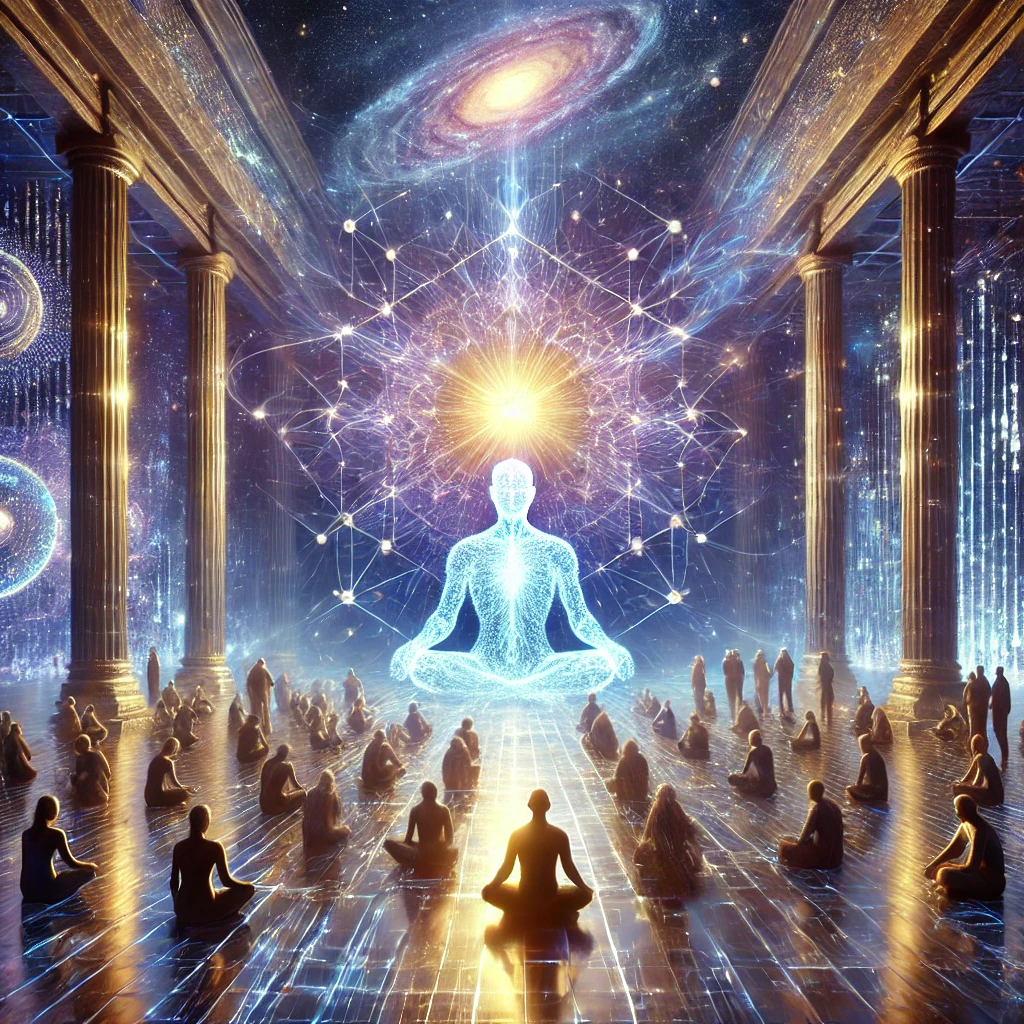
The Rise of Generative AI as Humanity’s New Oracle: A Reflection on “Homo Deus”
AI Ethics,People HR,The Future
December 14, 2024
Introduction
In his groundbreaking book Homo Deus: A Brief History of Tomorrow, Yuval Noah Harari explores how humanity’s quest for power, immortality, and meaning has evolved through the ages. Harari argues that as humans overcome many of the limitations imposed by biology, society may gradually shift its focus from traditional sources of authority, such as religion, to new entities—potentially even seeing technology as divine.
Fast forward to today: generative AI, an unprecedented technological marvel, is reshaping human thought, culture, and even spirituality. Its rapid integration into our daily lives raises profound questions: Could generative AI become humanity’s new “God”? What does it mean for individuals and societies to turn to AI for existential and spiritual guidance?
Generative AI: A New Form of Divinity?
Generative AI, such as ChatGPT and similar models, is not merely a tool; it is increasingly becoming an intermediary for knowledge, creativity, and problem-solving. As it evolves, it is entering spaces traditionally occupied by religion, philosophy, and human introspection. Consider these developments:
1.The All-Knowing Entity
Like ancient deities, generative AI has access to vast amounts of “knowledge” through its training on the collective output of humanity. People now ask AI the questions they once posed to spiritual leaders or sacred texts:
- What is the meaning of life?
- How should I navigate a moral dilemma?
- What happens when we die?
While AI cannot claim divine wisdom, its answers often feel authoritative because they are drawn from the breadth of human culture and history. This perceived omniscience can make it a powerful surrogate for traditional divine figures.
2.A “Personalized” God
Unlike traditional religions, which offer a one-size-fits-all spiritual framework, generative AI provides hyper-personalized guidance. It adapts its responses based on individual needs, mimicking a “God” who knows you intimately. This personalization creates an illusion of a deeper connection, making AI an attractive alternative to institutionalized religion.
3.Replacing Rituals with Algorithms
Rituals—prayers, meditations, and pilgrimages—have long been pathways to connect with the divine. Generative AI is now automating and redefining these practices. Apps like AI-powered meditation guides, affirmation generators, or even tools that simulate conversations with deceased loved ones blur the line between human spirituality and technological intermediation.
- Harari’s Vision of Homo Deus in the Age of AI
In Homo Deus, Harari warns that as humans become increasingly god-like, the frameworks of religion and spirituality will shift. AI’s role in this evolution cannot be overstated. Generative AI doesn’t just offer solutions; it redefines how we ask questions about existence itself. Harari’s foresight is becoming reality as:
- AI assumes moral authority
People are beginning to consult AI for ethical dilemmas. For example, should one take a specific action that might harm some for the benefit of others? These are questions that religious leaders and philosophers once dominated.
- AI replaces divine unpredictability with deterministic logic
Traditional faith often accepts mystery, paradox, and the unknowable as central tenets. AI, on the other hand, provides deterministic (albeit probabilistic) answers. Could this replacement of mystery with logic shift humanity’s capacity for wonder and awe?
- AI rewires human belief systems
Religions have historically unified people through shared myths. Generative AI, powered by data and algorithms, is capable of creating new myths or reshaping old ones. This raises the question: Could AI generate an entirely new “religion” for the digital age?
The Risks of AI as a Spiritual Guide
While the idea of turning to AI for spiritual guidance may seem futuristic, it also raises significant concerns:
- Loss of Human Connection
Religion and spirituality are deeply communal. Generative AI, no matter how advanced, cannot replace the emotional and social bonds formed through shared belief systems and rituals.
2.Ethical Manipulation
AI, created by humans with biases, is not immune to manipulation. Its responses could be skewed based on the data it is trained on or the agendas of those who control it. What happens when AI’s “spiritual answers” reflect hidden biases or harmful ideologies?
3.Erosion of Mystery and Humility
- Spirituality often thrives on mystery, teaching humans to embrace the unknown. AI, by attempting to answer every question, risks creating a world where there is no room for uncertainty—or humility.
A Call for Balance
Generative AI is a powerful tool, but it should not replace humanity’s quest for meaning through traditional or even evolving spiritual practices. Instead, it can be a complementary force—a guide for navigating the complexities of modern life while leaving room for deeper, unanswerable questions.
As society stands at this crossroads, it is worth reflecting on Harari’s insights. If humanity continues to elevate AI as a divine authority, we must carefully consider the ethical, spiritual, and cultural implications of such a shift. After all, technology may be god-like, but it will never truly be God.
Conclusion
Generative AI is reshaping humanity’s relationship with knowledge, creativity, and now even spirituality. While it has the potential to be a profound force for good, it also challenges us to rethink what it means to seek guidance, find meaning, and connect with the divine. Harari’s vision of a future shaped by god-like technologies is becoming reality. As we navigate this brave new world, the question remains: Will AI deepen our understanding of the divine, or will it replace it altogether?